

Philippines Commercial Vehicles Market 2026-2034 | Size, Share, Growth
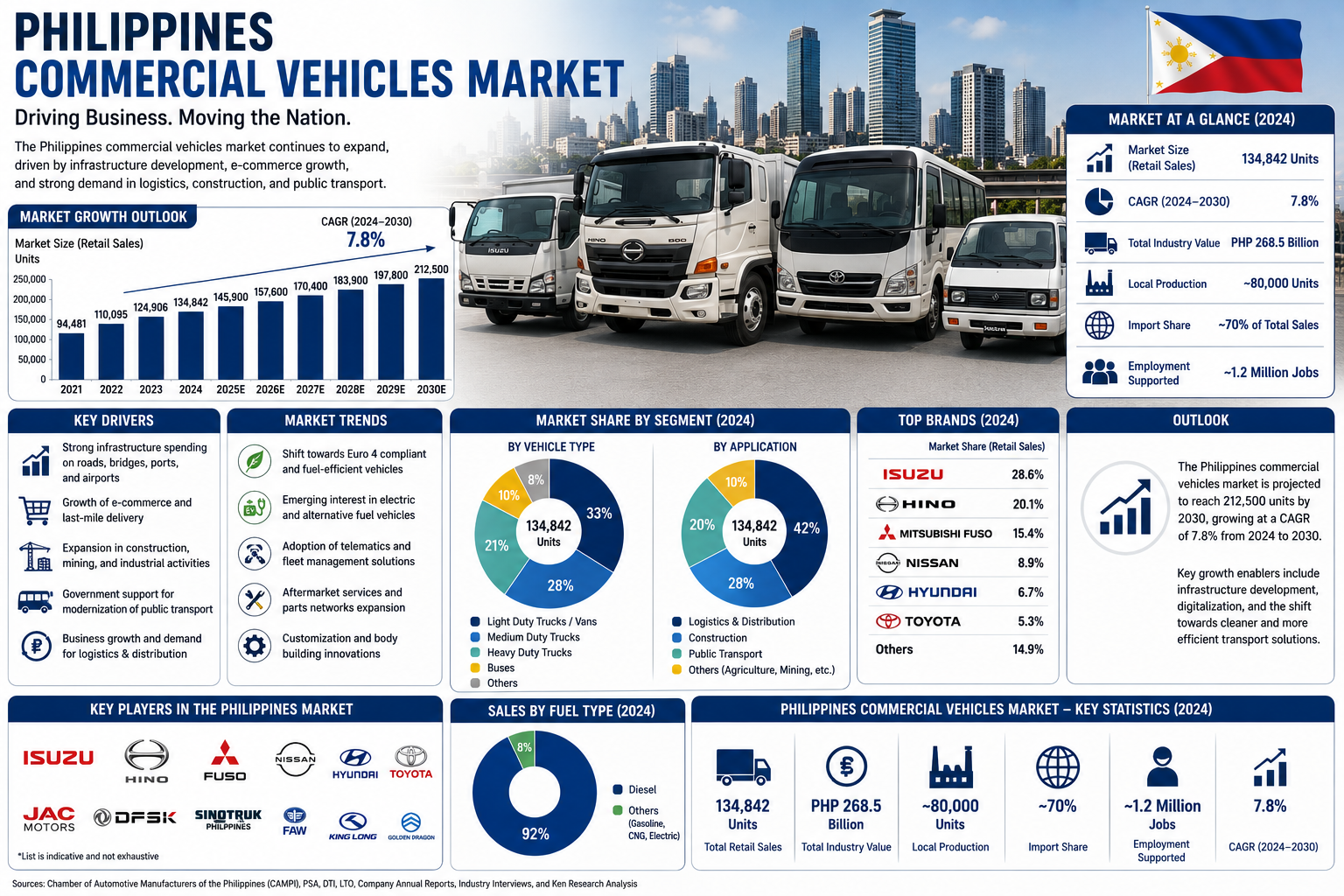
Philippines commercial vehicles market size was valued at USD 17,206.37 Million 2025, is projected to reach USD 22,935.22 Million 2034, CAGR of 3.24% 2026-2034.
PHILIPPINES, May 19, 2026 /EINPresswire.com/ --𝗠𝗮𝗿𝗸𝗲𝘁 𝗢𝘃𝗲𝗿𝘃𝗶𝗲𝘄:
The Philippines commercial vehicles market reached 𝗨𝗦𝗗 𝟭𝟳,𝟮𝟬𝟲.𝟯𝟳 𝗠𝗶𝗹𝗹𝗶𝗼𝗻 in 2025 and is projected to reach 𝗨𝗦𝗗 𝟮𝟮,𝟵𝟯𝟱.𝟮𝟮 𝗠𝗶𝗹𝗹𝗶𝗼𝗻 by 2034, exhibiting a growth rate (𝗖𝗔𝗚𝗥) 𝗼𝗳 𝟯.𝟮𝟰% 𝗱𝘂𝗿𝗶𝗻𝗴 𝟮𝟬𝟮𝟲–𝟮𝟬𝟯𝟰. The Philippines commercial vehicles market is experiencing stable growth, driven by the acceleration of infrastructure development under the government's Build Better More program, the rapid expansion of e-commerce logistics, and the nationwide Public Transport Modernization Program (PTMP) replacing legacy jeepney fleets with modern, Euro 4-compliant vehicles. Isuzu Philippines maintained its leadership in the truck segment with 4,794 units sold and a 42.2% market share, while the country's e-commerce market reached USD 28.0 billion — collectively fueling sustained demand for trucks, buses, vans, and last-mile delivery vehicles across the archipelago.
𝗪𝗵𝘆 𝗶𝘀 𝗛𝗼𝘁 𝗧𝗼𝗱𝗮𝘆 𝗣𝗵𝗶𝗹𝗶𝗽𝗽𝗶𝗻𝗲𝘀 𝗖𝗼𝗺𝗺𝗲𝗿𝗰𝗶𝗮𝗹 𝗩𝗲𝗵𝗶𝗰𝗹𝗲𝘀 𝗠𝗮𝗿𝗸𝗲𝘁?
Nearly 90% of public utility vehicle operators have now consolidated under the PTMP, driving massive fleet replacement demand; Foton Motor Philippines unveiled a full lineup of 100% electric commercial vehicles at its "EV Forward" event in Clark Freeport in August 2025; DHL Summit Solutions deployed one of the country's largest electric vehicle fleets including 23 electric vehicles and 22 prime movers; EV sales surged 36.2% to 11,800 units in Q1 2026; the government introduced new EV incentives including tax breaks and charging mandates in March 2026; and the Development Bank of the Philippines granted PHP 60.8 million to the Mandaluyong Transport Service Cooperative for 30 modern public utility vehicles under its PASADA financing program.
𝗣𝗵𝗶𝗹𝗶𝗽𝗽𝗶𝗻𝗲𝘀 𝗖𝗼𝗺𝗺𝗲𝗿𝗰𝗶𝗮𝗹 𝗩𝗲𝗵𝗶𝗰𝗹𝗲𝘀 𝗠𝗮𝗿𝗸𝗲𝘁 Summary:
• Isuzu Philippines Corporation maintained its leadership in the truck segment, selling 4,794 units and capturing a 42.2% market share across light-, medium-, and heavy-duty segments. In the light-duty truck category alone, Isuzu sold 2,814 units with a 41.5% share, while Toyota Motor Philippines led overall automotive sales with 229,447 units and a 49.49% market share — underscoring the strong institutional demand for commercial transport vehicles across logistics, construction, and distribution operations.
• The nationwide Public Transport Modernization Program is generating substantial fleet replacement demand, with nearly 90% of public utility vehicle operators now consolidated under the PTMP. The government aims to rationalize 50% of jeepney routes by end of 2025 and achieve 100% by end of 2026, with the PTMP budget increased to PHP 2.5 billion. Francisco Motor Corporation launched its electric Pinoy Transporter meeting Class 2 modern jeepney standards, while the DBP granted PHP 60.8 million in PASADA loans for 30 modern PUVs.
• The Philippines e-commerce market reached USD 28.0 billion, driving explosive demand for last-mile delivery vehicles. The logistics market reached USD 31.1 billion, with platforms like Lazada, Shopee, and TikTok Shop driving parcel volumes. 2GO Group expanded its express and e-commerce fulfillment capabilities with nationwide pickup, sorting, and last-mile delivery supported by digital tracking platforms — accelerating procurement of light commercial vehicles optimized for urban distribution.
• Electric commercial vehicles are gaining significant traction, with Foton Philippines showcasing a complete electric lineup including the Thunder EV pickup, Tornado EV light-duty truck, and Aumark EV medium-duty truck. Mober launched the Philippines' first fully electric tractor head with an 18-ton payload and 220 km range, while Pioneer Trucks debuted two Maxus electric models with ranges up to 510 km. DHL Express Philippines expanded its EV fleet with 13 e-UVs and five e-MCs capable of up to 250 km on a single charge.
• The government's Build Better More infrastructure program is allocating substantial budgets across 194 flagship projects, with infrastructure spending reaching PHP 1.545 trillion — approximately 5.8% of GDP. These projects spanning road networks, railway systems, airports, and seaports are generating strong demand for heavy-duty trucks, construction equipment carriers, and specialized transport vehicles across Luzon, Visayas, and Mindanao.
𝗛𝗼𝘄 𝗔𝗜 𝗶𝘀 𝗥𝗲𝘀𝗵𝗮𝗽𝗶𝗻𝗴 𝘁𝗵𝗲 𝗣𝗵𝗶𝗹𝗶𝗽𝗽𝗶𝗻𝗲𝘀 𝗖𝗼𝗺𝗺𝗲𝗿𝗰𝗶𝗮𝗹 𝗩𝗲𝗵𝗶𝗰𝗹𝗲𝘀 𝗠𝗮𝗿𝗸𝗲𝘁:
Artificial intelligence is rapidly transforming the Philippines commercial vehicles market, with AI-powered fleet management solutions driving a predicted 13.91% growth rate for the Philippine fleet management sector through 2032 — delivering smarter route optimization, predictive maintenance, fuel efficiency gains, and real-time telematics that are helping fleet operators across the archipelago reduce unplanned downtime by 30%, lower fuel costs by 12%, and predict equipment failures with 89% accuracy.
• 𝗔𝗜-𝗣𝗼𝘄𝗲𝗿𝗲𝗱 𝗙𝗹𝗲𝗲𝘁 𝗠𝗮𝗻𝗮𝗴𝗲𝗺𝗲𝗻𝘁 𝗮𝗻𝗱 𝗧𝗲𝗹𝗲𝗺𝗮𝘁𝗶𝗰𝘀: AI-driven telematics platforms are enabling Philippine logistics operators to monitor real-time vehicle location, engine diagnostics, driver behavior, and fuel consumption across distributed fleets — with GNSS, IoT, and AI solutions critical for managing the country's archipelagic geography where the average commercial vehicle is over 15 years old. Fleets deploying AI-powered telematics report 30% less unplanned downtime and 12% lower fuel costs, transforming fleet operations from reactive to data-driven decision-making.
• 𝗔𝗜-𝗗𝗿𝗶𝘃𝗲𝗻 𝗥𝗼𝘂𝘁𝗲 𝗢𝗽𝘁𝗶𝗺𝗶𝘇𝗮𝘁𝗶𝗼𝗻 𝗮𝗻𝗱 𝗟𝗮𝘀𝘁-𝗠𝗶𝗹𝗲 𝗗𝗲𝗹𝗶𝘃𝗲𝗿𝘆: Machine learning algorithms are optimizing delivery routes across the Philippines' complex urban and inter-island logistics networks, analyzing traffic patterns, weather conditions, ferry schedules, and delivery time windows to minimize fuel consumption and maximize drop density. With e-commerce platforms like Lazada, Shopee, and TikTok Shop driving surging parcel volumes, AI-powered route planning is becoming essential for logistics providers managing same-day and next-day delivery commitments across Metro Manila and provincial markets.
• 𝗣𝗿𝗲𝗱𝗶𝗰𝘁𝗶𝘃𝗲 𝗠𝗮𝗶𝗻𝘁𝗲𝗻𝗮𝗻𝗰𝗲 𝗮𝗻𝗱 𝗩𝗲𝗵𝗶𝗰𝗹𝗲 𝗛𝗲𝗮𝗹𝘁𝗵 𝗠𝗼𝗻𝗶𝘁𝗼𝗿𝗶𝗻𝗴: AI-powered predictive maintenance systems are analyzing engine sensor data, oil quality metrics, and component wear patterns to predict commercial vehicle failures with 89% accuracy — enabling Philippine fleet operators to schedule proactive repairs before breakdowns occur on critical delivery and transport routes, reducing maintenance costs and extending vehicle lifespans across aging fleet populations.
• 𝗔𝗜-𝗘𝗻𝗵𝗮𝗻𝗰𝗲𝗱 𝗗𝗿𝗶𝘃𝗲𝗿 𝗦𝗮𝗳𝗲𝘁𝘆 𝗮𝗻𝗱 𝗔𝗗𝗔𝗦 𝗜𝗻𝘁𝗲𝗴𝗿𝗮𝘁𝗶𝗼𝗻: AI-powered Advanced Driver Assistance Systems (ADAS) including collision avoidance, lane departure warnings, and fatigue detection are being integrated into modern commercial vehicles sold in the Philippines — enhancing safety across the country's diverse road conditions and supporting compliance with updated vehicle safety standards mandated under the PTMP modernization framework.
• 𝗦𝗺𝗮𝗿𝘁 𝗘𝗩 𝗙𝗹𝗲𝗲𝘁 𝗠𝗮𝗻𝗮𝗴𝗲𝗺𝗲𝗻𝘁 𝗮𝗻𝗱 𝗕𝗮𝘁𝘁𝗲𝗿𝘆 𝗢𝗽𝘁𝗶𝗺𝗶𝘇𝗮𝘁𝗶𝗼𝗻: As electric commercial vehicles gain traction in the Philippines, AI-powered battery management systems are optimizing charging schedules, predicting range based on load weight and route topography, and managing battery health to maximize lifespan — critical capabilities for operators like DHL and Mober transitioning to electric fleets across the Philippines' nearly 1,000 operational public EV charging stations.
𝗥𝗲𝗾𝘂𝗲𝘀𝘁 𝗳𝗼𝗿 𝗮 𝘀𝗮𝗺𝗽𝗹𝗲 𝗿𝗲𝗽𝗼𝗿𝘁 𝗣𝗗𝗙: https://www.imarcgroup.com/philippines-commercial-vehicles-market/requestsample
𝗠𝗮𝗿𝗸𝗲𝘁 𝗧𝗿𝗲𝗻𝗱𝘀 𝗮𝗻𝗱 𝗜𝗻𝘀𝗶𝗴𝗵𝘁𝘀:
• The electrification of commercial fleets is accelerating rapidly, with EV sales surging 36.2% to 11,800 units in Q1 2026 and the government introducing tax breaks, charging mandates, and incentives under the Electric Vehicle Incentive Strategy (EVIS) targeting up to nine million EVs between 2028 and 2040. Foton, Hyundai, Mober, and Pioneer Trucks are all launching dedicated electric commercial vehicle lineups for the Philippine market, with charging infrastructure expanding toward a target of 7,300 public stations by 2028.
• The e-commerce logistics boom is reshaping commercial vehicle demand, with the Philippines' USD 28.0 billion e-commerce market and USD 31.1 billion logistics market driving accelerating procurement of light commercial vehicles for last-mile delivery. Lazada is planning to add warehouses over the next 3–5 years, while on-demand logistics is growing at 13.46% annually — creating sustained demand for compact, fuel-efficient delivery vans equipped with digital tracking and route optimization capabilities.
• The Public Transport Modernization Program is entering its most intensive implementation phase, with the government targeting 100% route rationalization by end of 2026 and modern jeepney fares increasing to PHP 17 minimum. Transport cooperatives are replacing aging fleets with Euro 4-compliant and electric PUVs supported by government-backed PASADA financing, creating large-scale procurement cycles for modern minibuses, Class 2 jeepneys, and medium-duty passenger transport vehicles.
• Infrastructure spending continues to drive heavy commercial vehicle demand, with the government allocating PHP 1.545 trillion — approximately 5.8% of GDP — to flagship projects spanning highways, railways, airports, and seaports. These large-scale construction operations require heavy-duty dump trucks, concrete mixers, equipment transporters, and specialized utility vehicles, with geographic spread across Luzon, Visayas, and Mindanao broadening the market beyond the traditional NCR-Calabarzon corridor.
• The growing adoption of AI-powered fleet management and telematics systems is transforming how Philippine commercial fleets operate, with the fleet management market growing at 13.91% annually. Real-time GPS tracking, predictive maintenance alerts, driver behavior monitoring, and automated route optimization are helping operators reduce fuel costs by 12% and cut unplanned downtime by 30% — critical capabilities for managing the Philippines' aging fleet population where the average vehicle exceeds 15 years.
• Chinese commercial vehicle manufacturers — particularly Foton, Sinotruk, and Shacman — are gaining market share alongside established Japanese brands by offering competitively priced trucks and buses with increasingly sophisticated technology packages. This competitive intensification is broadening product availability, improving affordability, and giving fleet operators more options across light-, medium-, and heavy-duty segments, particularly in price-sensitive provincial and logistics markets.
𝗠𝗮𝗿𝗸𝗲𝘁 𝗚𝗿𝗼𝘄𝘁𝗵 𝗗𝗿𝗶𝘃𝗲𝗿𝘀:
𝗜𝗻𝗳𝗿𝗮𝘀𝘁𝗿𝘂𝗰𝘁𝘂𝗿𝗲 𝗗𝗲𝘃𝗲𝗹𝗼𝗽𝗺𝗲𝗻𝘁 𝗮𝗻𝗱 𝗚𝗼𝘃𝗲𝗿𝗻𝗺𝗲𝗻𝘁 𝗦𝗽𝗲𝗻𝗱𝗶𝗻𝗴
The government's Build Better More infrastructure program — with spending reaching PHP 1.545 trillion (5.8% of GDP) across 194 flagship projects — is one of the most powerful demand drivers for commercial vehicles. Large-scale construction of highways, railways, airports, and seaports requires heavy-duty trucks, construction carriers, and specialized transport vehicles. The geographic spread across Luzon, Visayas, and Mindanao is dispersing demand beyond Metro Manila, while cascading economic effects from improved transportation corridors are stimulating light and medium-duty vehicle procurement as new businesses and distribution networks emerge in connected communities.
𝗘-𝗖𝗼𝗺𝗺𝗲𝗿𝗰𝗲 𝗘𝘅𝗽𝗮𝗻𝘀𝗶𝗼𝗻 𝗮𝗻𝗱 𝗟𝗼𝗴𝗶𝘀𝘁𝗶𝗰𝘀 𝗧𝗿𝗮𝗻𝘀𝗳𝗼𝗿𝗺𝗮𝘁𝗶𝗼𝗻
The Philippines' USD 28.0 billion e-commerce market and USD 31.1 billion logistics market are fundamentally reshaping commercial vehicle demand. Platforms like Lazada, Shopee, and TikTok Shop are driving surging parcel volumes, with on-demand logistics growing at 13.46% annually. 2GO Group is expanding nationwide fulfillment capabilities, Lazada is adding warehouses over 3–5 years, and same-day delivery expectations are pushing logistics operators to invest in modern light commercial vehicles with digital tracking. The emergence of cold chain distribution, third-party logistics platforms, and specialized last-mile solutions is diversifying demand across compact delivery vans, temperature-controlled vehicles, and technologically equipped fleet configurations.
𝗣𝘂𝗯𝗹𝗶𝗰 𝗧𝗿𝗮𝗻𝘀𝗽𝗼𝗿𝘁 𝗠𝗼𝗱𝗲𝗿𝗻𝗶𝘇𝗮𝘁𝗶𝗼𝗻 𝗮𝗻𝗱 𝗙𝗹𝗲𝗲𝘁 𝗘𝗹𝗲𝗰𝘁𝗿𝗶𝗳𝗶𝗰𝗮𝘁𝗶𝗼𝗻
The PTMP — with nearly 90% of PUV operators now consolidated and 100% route rationalization targeted by end of 2026 — is generating massive fleet replacement demand. The PTMP budget of PHP 2.5 billion, combined with DBP's PASADA financing and manufacturer loan programs, is enabling cooperatives to replace aging jeepneys with modern Euro 4 and electric PUVs. Simultaneously, the EVIS framework targeting nine million EVs by 2040, new March 2026 tax incentives, and the entry of electric commercial vehicles from Foton, Hyundai, Mober, and Pioneer Trucks are structurally accelerating the transition toward electrified commercial transportation — supported by charging infrastructure scaling toward 7,300 public stations by 2028.
𝗠𝗮𝗿𝗸𝗲𝘁 𝗦𝗲𝗴𝗺𝗲𝗻𝘁𝗮𝘁𝗶𝗼𝗻:
IMARC Group's research categorizes the Philippines commercial vehicles market as follows:
𝗕𝘆 𝗩𝗲𝗵𝗶𝗰𝗹𝗲 𝗧𝘆𝗽𝗲:
• Light Commercial Vehicle
• Medium and Heavy-duty Commercial Vehicle
𝗕𝘆 𝗣𝗿𝗼𝗽𝘂𝗹𝘀𝗶𝗼𝗻 𝗧𝘆𝗽𝗲:
• IC Engine
• Electric Vehicle
𝗕𝘆 𝗘𝗻𝗱 𝗨𝘀𝗲:
• Industrial
• Mining and Construction
• Logistics
• Passenger Transportation
• Others
𝗕𝘆 𝗥𝗲𝗴𝗶𝗼𝗻:
• Luzon
• Visayas
• Mindanao
𝗞𝗲𝘆 𝗣𝗹𝗮𝘆𝗲𝗿𝘀:
The competitive landscape of the Philippines commercial vehicles market includes a comprehensive analysis of key player positioning, market structure, top winning strategies, competitive dashboards, and company evaluation quadrants. Some of the key players operating in the market include Isuzu Philippines Corporation, Toyota Motor Philippines Corporation, Mitsubishi Motors Philippines Corporation, Hyundai Trucks & Buses Philippines, Foton Motor Philippines, Hino Motors Ltd., and FUSO (Mitsubishi Fuso Truck and Bus Corporation). Detailed profiles of all major companies are provided within the full IMARC Group research report.
𝗥𝗲𝗰𝗲𝗻𝘁 𝗡𝗲𝘄𝘀 𝗮𝗻𝗱 𝗗𝗲𝘃𝗲𝗹𝗼𝗽𝗺𝗲𝗻𝘁𝘀:
𝗠𝗮𝗿𝗰𝗵 𝟮𝟬𝟮𝟲: The Philippine government introduced new EV incentives including tax breaks, charging mandates, and additional benefits for EV users under the Electric Vehicle Incentive Strategy (EVIS), targeting the rollout of up to nine million EVs between 2028 and 2040 — while LTFRB approved modern jeepney fare hikes to PHP 17 minimum effective March 19, 2026.
𝗤𝟭 𝟮𝟬𝟮𝟲: EV sales surged 36.2% to 11,800 units in the first quarter, raising the xEV market share to 11.1% of total vehicle sales — signaling accelerating adoption of electric commercial and passenger vehicles across the Philippines.
𝗝𝗮𝗻𝘂𝗮𝗿𝘆 𝟮𝟬𝟮𝟲: Isuzu Philippines reported selling 4,794 truck units in 2025 with a 42.2% market share, marking 4.4% year-on-year growth and reinforcing its dominance across light-, medium-, and heavy-duty truck segments nationwide.
𝗔𝘂𝗴𝘂𝘀𝘁 𝟮𝟬𝟮𝟱: Foton Motor Philippines unveiled a comprehensive range of 100% electric commercial vehicles for logistics and transport at its "EV Forward" event in Clark Freeport — including the Thunder EV pickup, Tornado EV light-duty truck, Aumark EV medium-duty truck, and EST Tractor Head EV.
𝟮𝟬𝟮𝟱: DHL Summit Solutions deployed one of the Philippines' largest electric vehicle fleets, including 23 electric vehicles and 22 prime movers, as part of its commitment to increase EV share and reduce logistics emissions across the country.
𝟮𝟬𝟮𝟱: Mober launched the Philippines' first fully electric tractor head truck featuring an 18-ton payload, 220 km range, and 2-hour fast charging — with plans to scale its electric fleet to 500 units by year-end, marking a milestone in heavy-duty commercial vehicle electrification.
𝗕𝗿𝗼𝘄𝘀𝗲 𝘁𝗵𝗲 𝗳𝘂𝗹𝗹 𝗿𝗲𝗽𝗼𝗿𝘁 𝘄𝗶𝘁𝗵 𝗧𝗢𝗖 𝗮𝗻𝗱 𝗹𝗶𝘀𝘁 𝗼𝗳 𝗳𝗶𝗴𝘂𝗿𝗲𝘀: https://www.imarcgroup.com/philippines-commercial-vehicles-market
𝗡𝗼𝘁𝗲: 𝗜𝗳 𝘆𝗼𝘂 𝗿𝗲𝗾𝘂𝗶𝗿𝗲 𝗮𝗻𝘆 𝘀𝗽𝗲𝗰𝗶𝗳𝗶𝗰 𝗶𝗻𝗳𝗼𝗿𝗺𝗮𝘁𝗶𝗼𝗻 𝘁𝗵𝗮𝘁 𝗶𝘀 𝗻𝗼𝘁 𝗰𝗼𝘃𝗲𝗿𝗲𝗱 𝗰𝘂𝗿𝗿𝗲𝗻𝘁𝗹𝘆 𝘄𝗶𝘁𝗵𝗶𝗻 𝘁𝗵𝗲 𝘀𝗰𝗼𝗽𝗲 𝗼𝗳 𝘁𝗵𝗲 𝗿𝗲𝗽𝗼𝗿𝘁, 𝘄𝗲 𝘄𝗶𝗹𝗹 𝗽𝗿𝗼𝘃𝗶𝗱𝗲 𝘁𝗵𝗲 𝘀𝗮𝗺𝗲 𝗮𝘀 𝗮 𝗽𝗮𝗿𝘁 𝗼𝗳 𝘁𝗵𝗲 𝗰𝘂𝘀𝘁𝗼𝗺𝗶𝘇𝗮𝘁𝗶𝗼𝗻.
Other Report By IMARC Group:
Philippines Car Subscription Market 2026: https://www.imarcgroup.com/philippines-car-subscription-market
Philippines Folding Bike Market 2026: https://www.imarcgroup.com/philippines-folding-bike-market
Philippines Bulldozer Market 2026: https://www.imarcgroup.com/philippines-bulldozer-market
Philippines Lithium-ion Battery Market 2026: https://www.imarcgroup.com/philippines-lithium-ion-battery-market
Philippines Acetonitrile Market 2026: https://www.imarcgroup.com/philippines-acetonitrile-market
𝗔𝗯𝗼𝘂𝘁 𝗨𝘀
IMARC Group is a global management consulting firm that helps the world's most ambitious changemakers to create a lasting impact. The company provides a comprehensive suite of market entry and expansion services. IMARC offerings include thorough market assessment, feasibility studies, company incorporation assistance, factory setup support, regulatory approvals and licensing navigation, branding, marketing and sales strategies, competitive landscape and benchmarking analyses, pricing and cost research, and procurement research.
𝗖𝗼𝗻𝘁𝗮𝗰𝘁 𝗨𝘀
𝗜𝗠𝗔𝗥𝗖 𝗚𝗿𝗼𝘂𝗽
134 N 4th St., Brooklyn, NY 11249, USA
𝗘𝗺𝗮𝗶𝗹: sales@imarcgroup.com
𝗧𝗲𝗹. 𝗡𝗼.: (D) +91 120 433 0800
𝗨𝗻𝗶𝘁𝗲𝗱 𝗦𝘁𝗮𝘁𝗲𝘀: +1-201-971-6302
Elena Anderson
IMARC Services Private Limited
+1 201-971-6302
email us here
Legal Disclaimer:
EIN Presswire provides this news content "as is" without warranty of any kind. We do not accept any responsibility or liability for the accuracy, content, images, videos, licenses, completeness, legality, or reliability of the information contained in this article. If you have any complaints or copyright issues related to this article, kindly contact the author above.
